
May 9, 2020 · 4 min read
Bilateral coordination in children
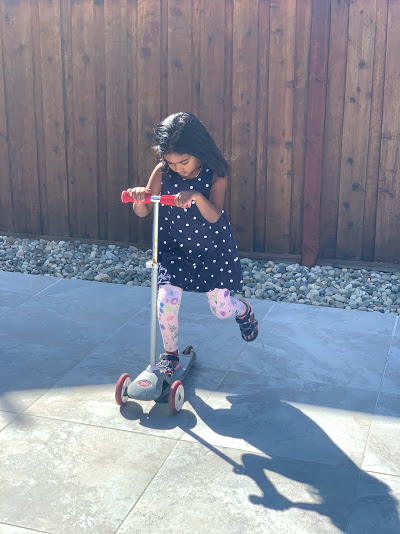
Bilateral coordination refers to the ability to use both sides of the body at the same time in a controlled and organized manner. It is unconsciously used for everyday activities such as buttoning a shirt or catching a cup as it falls to the ground. Bilateral coordination is the result of the successful integration of vestibular, proprioceptive, and visual sensations along with efficient communication between two sides of the brain. It is also called bilateral integration. Sensory integration is an important domain for successful bilateral integration.
How does the vestibular system impact bilateral coordination?
The vestibular system contributes to the body's movement and sense of balance. It is an important sensory system that informs us about movement, change of direction, and head position in relation to gravity. The vestibular system interacts with all the other sensory systems and impacts our posture, muscle tone, balance, and bilateral coordination. The vestibular system strongly connects with the proprioceptive system (body awareness). Body awareness refers to the ability to know where your body is in space without using vision. The vestibular system is also connected to the visual system in order to stabilize the head so that the eyes can focus on an object, or to move both eyes together to track or scan an object while maintaining our head in a stable position.
In the simple task of catching a ball, we need to keep our head stable (vestibular sense) to see from which side the ball is approaching (vision) and, at the same time, lift our hands towards the ball with an appropriate amount of force (proprioception).
How do children develop bilateral integration?
Children develop bilateral integration in stages.
- Symmetrical bilateral integration: Initially babies use both hands simultaneously to perform an action (such as holding objects with two hands, clapping hands, banging objects together).
- Reciprocal bilateral integration: The child starts developing movements on one side of the body that is opposite from the other side (such as learning to crawl, walk, climb stairs).
- Asymmetrical bilateral integration: The child has developed a dominant hand and uses that hand to manipulate objects while the other hand stabilizes or helps — like holding paper with one hand while coloring with the other.
- Crossing midline: The ability to reach across the middle of the body to perform an action, such as scratching the opposite shoulder, sitting with legs crossed, drawing a horizontal line without switching hands, or reading from left to right.
- Laterality: The dominance of one side of the body. Handedness develops once the child has established crossing the midline consistently with the same hand for skilled tasks.
An under-reactive vestibular system has poor bilateral integration functioning and interferes with specialization. If the two sides of the brain are not communicating effectively, they develop similar functions. Children with poor specialization use both hands or switch between hands for functional activities and are considered ambidextrous — resulting in not being skilled with any one hand.
Symptoms of bilateral integration difficulties
- The child may appear clumsy and uncoordinated
- Missed crawling as a baby
- Started walking at a later age
- Delayed emergence of hand dominance or no handedness even after 5 yrs of age
- Difficulty in daily living skills, such as dressing, buttoning, shoe tying, brushing, self-feeding
- Trouble reading and writing because the child cannot visually cross the midline when reading from left to right
- Poor performance in arts and crafts projects at school due to improper tool use
How to help your child with bilateral integration problems?
Bilateral coordination develops naturally with most children, so it isn't a good idea to train children in coordination activities earlier when they are not ready. As the baby grows, they make adaptive responses to the challenges created by their environment.
If you suspect your child has a problem with bilateral integration, consulting an occupational therapist is a good step to start with. The occupational therapist trained in sensory integration uses specific movement activities to stimulate the vestibular system, creating bilateral coordination challenges that are just right for the child to make adaptive responses. Thereby, the child generalizes these responses in their day-to-day life in their home, school, and community settings.